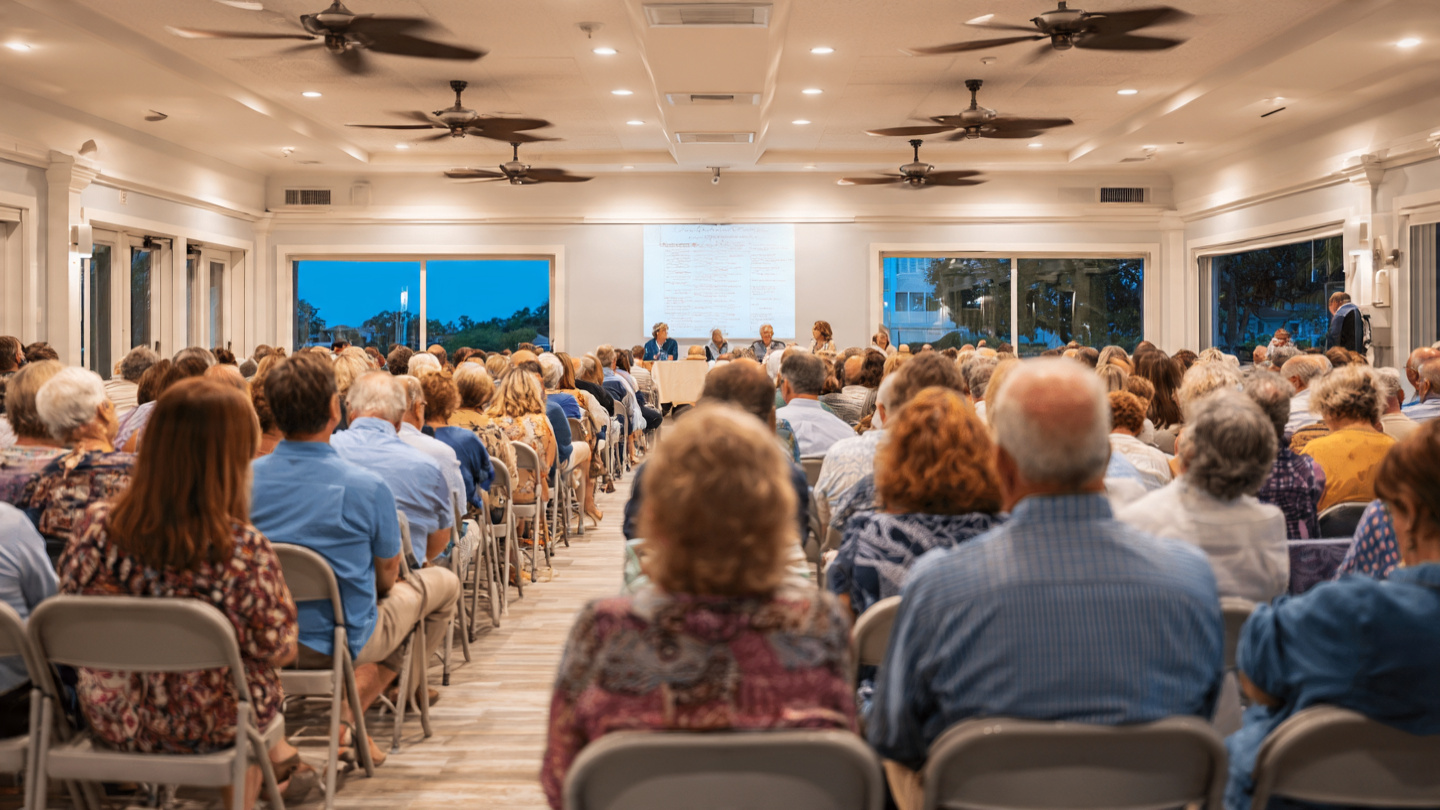

How Do Self Managed HOA Meetings Florida Work?
Self managed HOA meetings Florida require volunteer boards to satisfy every Chapter 720 procedural requirement from notice through documentation. Florida HOA meetings carry significant legal weight regardless of who organizes them. In addition, procedural errors at any stage can invalidate governance decisions and expose the association to owner challenges.
Florida law does not reduce meeting obligations because a community chooses to self-manage. A self managed HOA meetings Florida community must provide proper notice, verify quorum, and produce complete minutes. Without documented meeting procedures, volunteer boards create governance vulnerabilities that compound over time.
Why Florida HOA Meeting Procedures Carry Legal Weight
Chapter 720 establishes specific procedural requirements for every type of association meeting. Annual meetings, board meetings, and special meetings each carry their own notice periods, agenda requirements, and documentation standards. Therefore, volunteer boards that conduct meetings informally create vulnerabilities that owners can use to challenge governance decisions.
Consistent, documented meeting procedures across every meeting type demonstrate that the board conducts governance with statutory precision. When every meeting produces a complete, organized record, boards defend governance decisions against any subsequent challenge. Consequently, purpose-built meeting management tools protect the association’s governance record and its legal standing.
Self Managed HOA Meetings Florida and Chapter 720
Dedicated self managed HOA meetings Florida management software connects every meeting type to the Chapter 720 provisions that govern it. The platform configures notice templates, agenda workflows, quorum tracking, and minute documentation for every required meeting type. Furthermore, automated notice scheduling ensures every required notice goes out within the statutory timeframe.
Each meeting workflow guides board members through the correct sequence of steps for every meeting type. Because the platform automates notice deadlines and agenda distribution, volunteer boards conduct meetings with professional procedural consistency. This gives every self-managed community the institutional knowledge that supports effective, legally defensible governance.
Annual Meeting Requirements for Self-Managing Boards
Annual meeting requirements under Chapter 720 include specific notice periods, agenda content, quorum thresholds, and election procedures. The platform generates required annual meeting notices with correct content and distributes them automatically within the statutory timeframe. Moreover, election management tools track candidate submissions, ballot procedures, and quorum verification.
Quorum tracking also gives self-managed boards real-time visibility into attendance before any votes are taken. As a result, boards avoid the procedural errors that invalidate meeting actions and expose governance decisions to challenges.
Board Meeting Notice and Documentation Standards
Board meetings under Chapter 720 carry their own notice requirements, agenda standards, and minute documentation obligations. The platform generates board meeting notices, tracks agenda items, and timestamps every motion and vote. Additionally, minute documentation workflows produce complete, organized records that satisfy Chapter 720’s documentation requirements.
Meeting minute documentation captures every board action in a format the association retains permanently. Above all, complete, organized meeting records are the strongest protection a volunteer board has when governance decisions face owner challenges.
Protecting Meeting Actions Against Owner Challenges
When volunteer boards face challenges to meeting actions, the completeness of their meeting records determines their legal position. The platform preserves every notice, agenda, attendance record, and minute with timestamped audit trails. Moreover, consistent documentation across every meeting type demonstrates that the board followed required procedures at every stage.
Through the owner portal, association members access posted meeting notices, approved agendas, and adopted minutes at any time. This transparency also satisfies Chapter 720 inspection rights and demonstrates the board’s commitment to open governance. Similarly, boards that produce complete meeting records face fewer challenges about required procedures.
Steps for Achieving Goal
- Configure meeting workflows for every required meeting type, including annual meetings, board meetings, and special meetings under Chapter 720.
- Set up notice templates for each meeting type with correct content, required language, and statutory notice period scheduling built in.
- Activate quorum tracking tools to verify attendance before votes are taken at every meeting type.
- Configure minute documentation workflows that capture motions, votes, resolutions, and attendance in a complete, defensible format.
- Connect meeting documentation to the owner portal so members can access posted notices, agendas, and adopted minutes.
- Train every board member on the meeting notice, agenda management, and minute documentation workflows within the platform.
- Maintain complete meeting records as permanent association records accessible to management, board members, and legal counsel.
Key Takeaways
- Running self managed HOA meetings Florida correctly requires satisfying Chapter 720 notice, quorum, and documentation requirements for every meeting type.
- Chapter 720 establishes specific notice periods, agenda requirements, and documentation standards for annual meetings, board meetings, and special meetings.
- Automated notice scheduling ensures required meeting notices go out within statutory timeframes without manual coordination from volunteer board members.
- Quorum tracking tools verify attendance before votes are taken, preventing the procedural errors that invalidate meeting actions and governance decisions.
- Complete meeting minute documentation creates a defensible governance record that protects volunteer boards when meeting actions face owner challenges.
- Owner portal access to meeting notices, agendas, and minutes satisfies Chapter 720 inspection rights.
- A fully configured meeting management platform gives self-managed communities procedural consistency and organized records through every board transition.
Conclusion
Managing association meetings without professional management requires the same procedural precision Chapter 720 demands from any Florida HOA. Volunteer boards that conduct meetings informally create documentation gaps that undermine governance decisions when challenges arise. Nevertheless, purpose-built meeting management tools bring every meeting type into one organized, legally defensible system.
Adopting the right self managed HOA meetings Florida platform gives boards the tools to conduct meetings correctly. Furthermore, the platform preserves institutional knowledge and maintains the complete meeting record every HOA requires.
Communities that invest in structured meeting management demonstrate to every owner that governance meets the standards Chapter 720 demands. Most importantly, they build the complete meeting record that protects the association when owner challenges, disputes, or legal proceedings arise. Self managed HOA meetings Florida governance achieves that standard with the right platform in place.
The information provided on this website is NOT to be considered legal advice. Associations and unit owners should consult with legal counsel for the specific application of the Association’s governing documents and Florida Statutes.