
What Is Florida Self Managed HOA Compliance?
Operating a homeowners association without professional management places the full weight of legal compliance directly on the board. Every decision, every notice, and every financial record carries statutory significance. Florida self managed hoa compliance is not a single task. It is an ongoing commitment to meeting every obligation the law places on community associations operating across the state.
Chapter 720 of the Florida Statutes governs homeowners associations in Florida with specific and detailed requirements. Boards that fail to understand and implement these requirements expose their communities to legal challenges, owner disputes, and regulatory consequences. Therefore, self-managed boards must treat compliance as a core operational priority, not an afterthought.
Defining Florida Self Managed HOA Compliance
Compliance for a self-managed HOA means operating the association in full conformance with Florida law and the association’s own governing documents. It covers financial management, record-keeping, owner communications, meeting procedures, and enforcement of community rules. Furthermore, it requires that every action the board takes can be documented, justified, and defended if challenged.
Many self-managed boards underestimate the complexity of this responsibility. Consequently, gaps in compliance often develop gradually through overlooked procedures and inconsistent practices. A structured approach to florida self managed hoa compliance prevents those gaps from becoming costly legal problems.
Financial Compliance Requirements for Florida HOAs
Financial compliance is among the most demanding areas for self-managed associations. Chapter 720 requires associations to prepare annual budgets, maintain detailed financial records, and provide owners with financial reporting on a defined schedule. Additionally, associations must maintain separate reserve accounts for the funding of major repairs and replacements.
Boards must also ensure that assessments are levied and collected in accordance with the governing documents and Florida law. Proper accounting practices, bank reconciliation, and audit or review requirements apply based on association size and revenue thresholds. Therefore, financial compliance demands both accurate record-keeping and working knowledge of applicable statutory requirements.
Record-Keeping and Owner Access Rights
Florida law grants owners specific rights to inspect and copy association records. Florida self managed hoa compliance requires that boards maintain organized, accessible records and respond to owner inspection requests within statutory timeframes. Failure to comply with records requests can result in penalties and legal exposure for the association.
Required records include financial statements, meeting minutes, contracts, governing documents, and owner correspondence. Moreover, associations must retain these records for the periods defined by Chapter 720. A purpose-built document management system makes compliance with record retention and access requirements significantly more manageable. Organized records also demonstrate transparency and build owner confidence in board leadership.
Meeting and Notice Requirements
Board meetings and membership meetings each carry specific notice and procedural requirements under Florida law. Self-managed boards must provide proper advance notice, post agendas, conduct meetings according to established procedures, and retain approved minutes. Additionally, certain decisions require membership votes rather than board action alone.
Consequently, florida self managed hoa compliance demands that boards understand the distinction between actions requiring full membership approval and those within board authority. Annual meeting requirements, election procedures, and quorum rules each carry their own statutory standards. Boards that conduct meetings without following proper procedures risk having their decisions challenged and invalidated.
Violation Enforcement and Due Process
Enforcing community rules is a necessary function of HOA governance. However, Florida law requires that associations follow defined due process procedures before imposing fines or suspending owner privileges. Therefore, boards must provide written notice of violations, allow reasonable time to cure, and conduct hearings when owners request them.
Similarly, fines must comply with the maximum amounts and procedures established under Chapter 720 and the association’s governing documents. Inconsistent or procedurally defective enforcement exposes the association to discrimination claims and legal challenges. A documented, systematic enforcement process protects the association and treats all owners with equal fairness.
Technology Solutions Supporting HOA Compliance
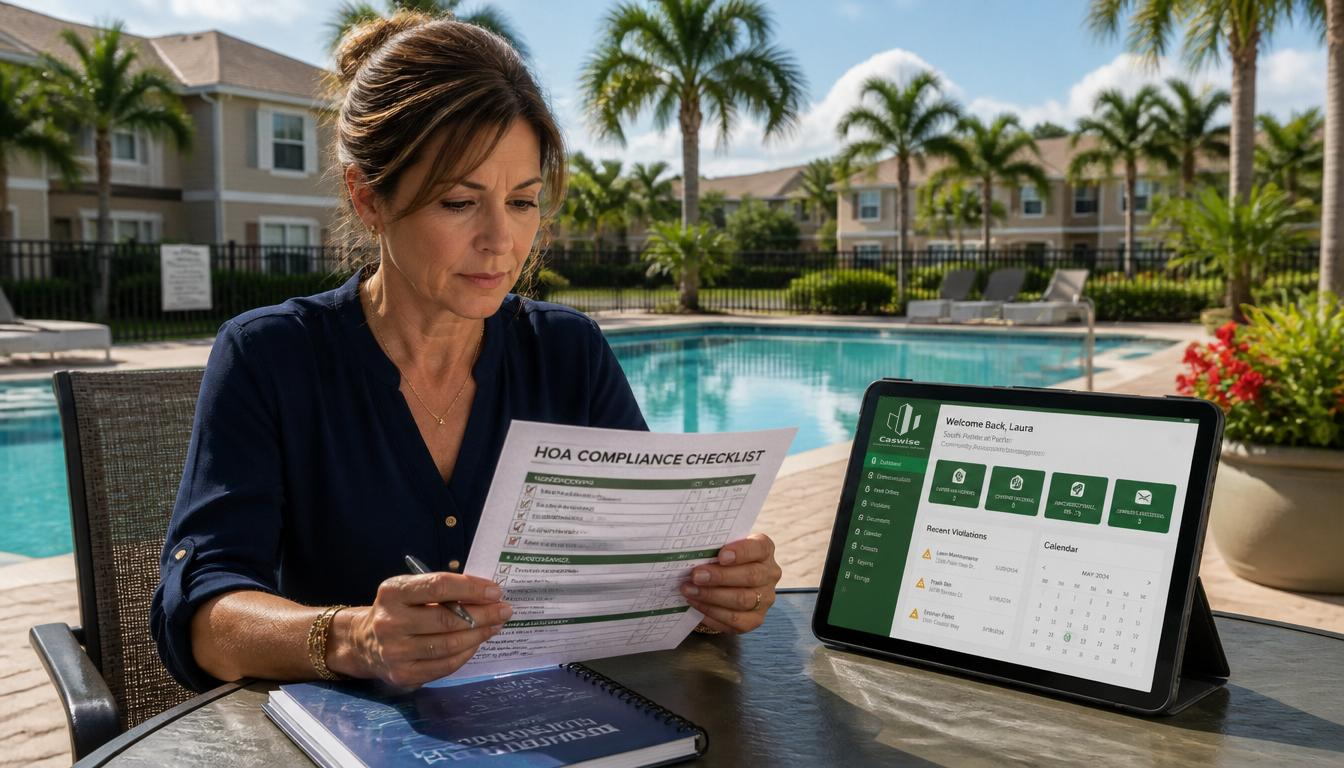
Purpose-built software plays a critical role in helping self-managed boards achieve florida self managed hoa compliance consistently. Integrated platforms combine accounting, document management, violation tracking, owner communications, and meeting management in a single system. Furthermore, automated workflows reduce the risk of missed deadlines and procedural errors.
Above all, a compliance-focused platform creates the documented record trail that protects associations during disputes, audits, and legal proceedings. Boards that operate with organized, accessible systems demonstrate professional governance and reduce their legal exposure significantly. Technology does not replace legal counsel. It does, however, give boards the operational foundation they need to perform their duties correctly every day.
Steps for Achieving Goal
- Conduct a comprehensive compliance audit of your association’s current operations against Chapter 720 requirements and your governing documents.
- Identify every area where current practices fall short of statutory requirements and prioritize corrections by legal risk level.
- Adopt a formal compliance calendar that tracks all recurring obligations including budget deadlines, meeting notices, financial reporting, and record retention schedules.
- Implement a purpose-built platform that integrates accounting, document management, violation tracking, and owner communications in a single system.
- Establish written policies for collections, violation enforcement, records requests, and meeting procedures to ensure consistent application across all board members.
- Schedule annual reviews of your governing documents and compliance procedures to identify changes required by updates to Florida law.
- Retain qualified legal counsel to advise the board on complex compliance questions and review major decisions before implementation.
Key Takeaways
- Florida self managed hoa compliance requires ongoing conformance with Chapter 720 and the association’s governing documents across all operational areas.
- Financial compliance demands accurate record-keeping, proper reserve funding, and adherence to statutory reporting requirements based on association size.
- Owners hold statutory rights to inspect association records, and boards must respond to those requests within defined timeframes.
- Meeting and notice procedures carry specific statutory requirements that boards must follow to protect the validity of their decisions.
- Violation enforcement must include written notice, cure periods, and hearing rights before the association imposes fines or suspends privileges.
- Purpose-built software provides the integrated operational foundation self-managed boards need to maintain consistent compliance.
- Annual compliance reviews and qualified legal counsel help boards stay current with Florida statutory requirements as they evolve.
Conclusion
Florida self managed hoa compliance is one of the most complex and consequential responsibilities a volunteer board can carry. The legal obligations established under Chapter 720 touch every aspect of association operations. Boards that approach compliance systematically, supported by proper tools and qualified guidance, protect their communities and their fellow owners.
Professional compliance is not about fear of penalties. It is about building a community that operates with integrity, transparency, and respect for every owner’s rights. Self-managed boards that commit to that standard set the foundation for a well-governed, financially sound, and legally protected community.
The information provided on this website is NOT to be considered legal advice. Associations and unit owners should consult with legal counsel for the specific application of the Association’s governing documents and Florida Statutes.